
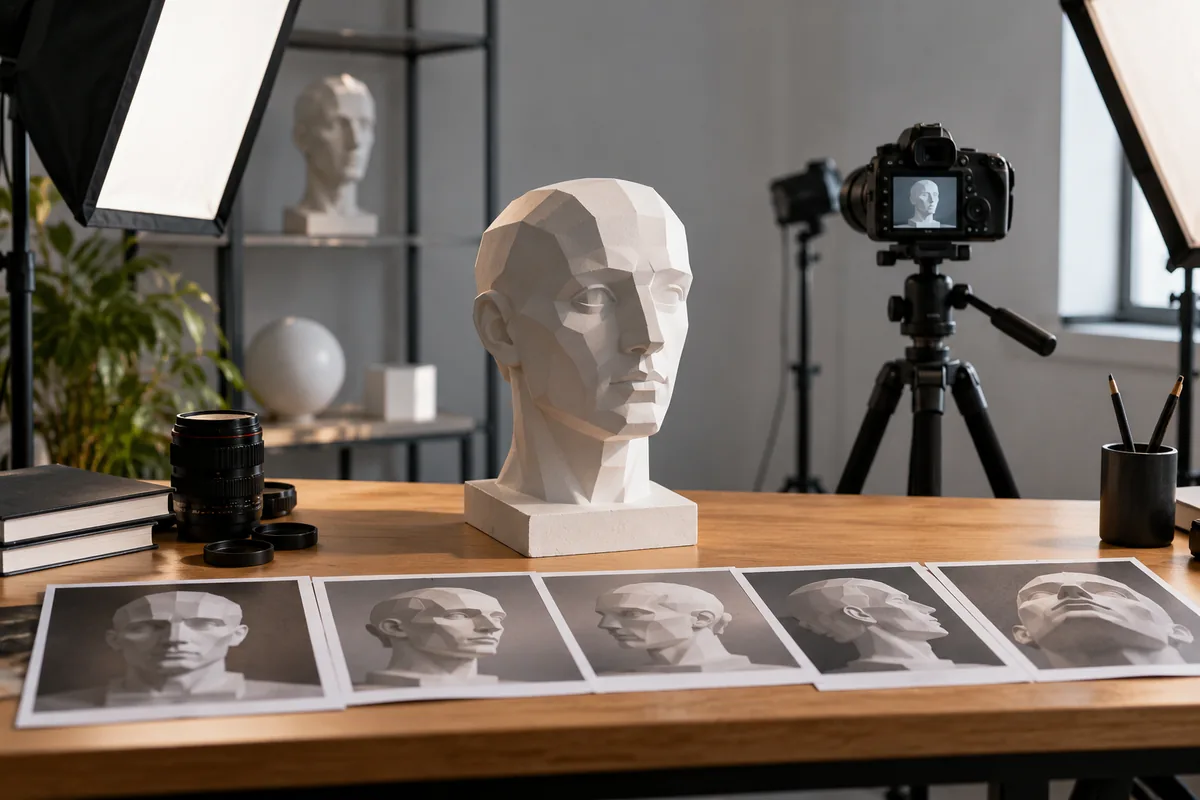
Dozens of similar photographs do not always provide more information than a few suitable images. Facial comparison depends on feature visibility, viewing angle, lighting, resolution and acquisition conditions. The number of files does not compensate for identical blur or an obscured face in every image.
Preserve the original image
It is preferable to submit the available original file and information about its provenance. A frame screenshot, forwarded thumbnail and video from the original device may differ in the amount of information they contain. Neural-network enhancement or retouching does not create reliably observed facial details.
What to describe in the inventory
- The source of each file and the known capture date.
- Who obtained the copy and by what method.
- Availability of the original video or sequence of frames.
- Known transformations: cropping, resaving and changes in speed.
- Information about which images are comparison images and why.
Viewing angle and perspective
The positions of the head and camera affect visible proportions. A wide-angle close-up and an image taken from a distance may depict the same face differently. A visual mismatch between two random frames therefore does not by itself substantiate a conclusion that they show different people.
Select frames while preserving the sequence
If the object comes from a video, it is useful to provide the recording itself and precise timestamps for the selected frames. The sequence helps assess viewing angle, obstructions and stability of the observed features. You must not select only the frame most similar to the comparison image while concealing the other available conditions.
Do not annotate the only original copy. A separate file may be prepared for explanation, with the original material preserved unchanged and the derivative version clearly identified.
Suitability and the result are different stages
The specialist first assesses which features are available and whether they are sufficient for the task. The comparison itself follows. A preliminary impression of similarity should not be reported as a completed identification conclusion.
The report should list the files examined, describe limitations and explain the combination of features. If quality is insufficient, a proper statement that the question cannot be resolved confirms neither identity nor difference. Further work involves discussing which additional materials could remedy the specific deficiency.